Fixer Service
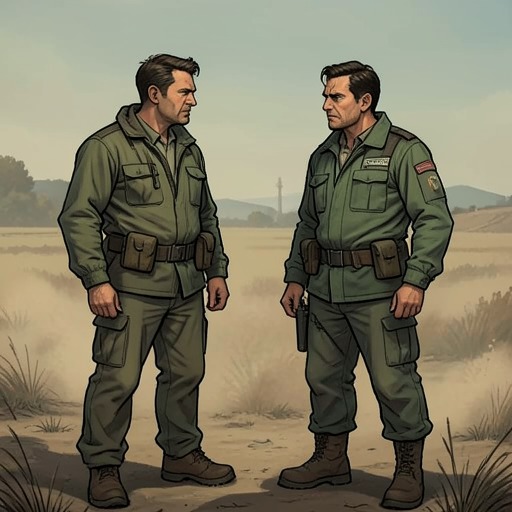
The ShepherdThe Fixer Service is the Council-associated institution behind the field operatives known as Fixers, whose work can involve both gathering intelligence and enforcing the laws of their people. The novel presents the Service less as a fully mapped bureaucracy than as a power felt through assignments, recruitment, and the Council’s ability to find a target even in a remote war zone. Its authority is tested when Lawson is sent to stop the Shepherd, a Vampire whose actions violate those laws.
Identity and Institutional Remit
The Service’s clearest institutional detail emerges through the distinction between a Fixer’s work and the Council’s quieter intelligence collection. Lawson understands that Fixers can figure prominently in gathering information, but that the Council also obtains intelligence more discreetly, without the force his own work sometimes requires. The Ferrets are a small subunit within the Council’s intelligence service, created to remain nearly invisible while acquiring as much reliable information as possible. Their role shows that the Council does not rely on Fixers alone to learn what is happening elsewhere; it also maintains a separate, covert intelligence capability.
The two functions intersect in the mission against the Shepherd. Niles tells Lawson that the Council has identified a target in Afghanistan who is one of their own: a Vampire living among the Taliban as a shepherd. The Service’s field role is therefore not simply combat or intelligence gathering. In this case it acts as an instrument for enforcing laws that apply within the Vampire community, even when the alleged offender is far beyond the Council’s immediate reach.
Recruitment and Personnel
Lawson’s own path into the Service is linked to a judgment made by the Council. He recalls being told that he would be an asset, and describes a selection encounter in which the Council presented several objects and asked him to choose the one he liked best. He chose a small pewter set of scales. The passage connects the Service’s recruitment of Lawson with an image of judgment, though it does not explain whether the object was a formal test or what the Council inferred from his choice.
Haydar is another example of the Council’s use of personnel in different capacities. Niles identifies him as a Ferret, and Haydar says the Council considered him an asset to the Service. The distinction matters: Haydar’s intelligence work is not the same as Lawson’s Fixer role, but their assignments bring them together. Haydar helps Lawson leave the city and directs him toward a supply cache before the crossing into Afghanistan, making a covert operative’s local knowledge part of the practical support for a Fixer’s mission.
Intelligence, Reach, and Field Support
The Council’s intelligence reach is presented as extending into a region where movement across the Afghanistan–Pakistan border makes surveillance difficult. Niles describes Taliban fighters moving back and forth through mountains threaded with trails, valleys, and crevices that coalition troops cannot all monitor. Against that background, the identification of the Shepherd as a target demonstrates the value of intelligence beyond conventional battlefield observation. Lawson later tells the Shepherd that the Council hears things from everywhere, undercutting the assumption that remoteness and insulation are enough to make someone invisible.
The Service’s operational support is concrete but limited. Haydar can drive Lawson only to a point roughly five miles from Afghanistan’s border, because the truck would attract attention if it went closer. He identifies an animal run leading to rocks beyond the border where Lawson can wait for a signal. Before Lawson sets out, Haydar directs him to a cache of supplies and warns that the area is a war zone where locals may shoot at him. The mission thus depends on preparation and a discreet approach, not on an overt force moving openly across the frontier.
Once across, Lawson’s exposure illustrates how field operations can be threatened by more than an armed opponent. Waiting in the rocks, he hears a drone and recognizes that shadow alone will not conceal him from its infrared, thermal, and other instruments; he fears being targeted by a Hellfire missile. Later, as he advances at night with an M4 loaded with human ammunition, he considers the possibility of encountering Taliban ambushes or special operations forces. The Service can send a Fixer into the field, but the terrain, surveillance technology, and presence of other armed units make control of the mission uncertain.
Authority, Rules, and Urgency
The Council’s authority is expressed most plainly through the laws Lawson invokes when he confronts the Shepherd. Lawson says that the Council cannot allow him to bleed children dry and insists that he has broken the laws of their people. The Shepherd rejects the relevance of those rules in his remote setting, arguing that survival is the only rule there. Their exchange makes the Service’s enforcement role a conflict over jurisdiction as well as conduct: the Shepherd treats distance and local hardship as grounds to disregard the Council, while Lawson treats the violation itself as sufficient reason to act.
The assignment is governed by a severe deadline. When Cutter suggests using drones and joining the action after the target has been located, Lawson refuses: the Shepherd must be taken down that night, at any cost. Cutter understands that Lawson and Veena are acting on their own, rather than as part of the force Cutter assumes they represent, and wishes them luck. The order’s urgency narrows the available options and intensifies the risks already created by the border crossing and surveillance environment.
Narrative Significance
The Fixer Service is defined through a tension between broad authority and dangerous, local execution. The Council’s intelligence can reach a hidden target in a remote region, and its laws are invoked across a border; yet a Fixer on the ground must rely on a guide, a cache, an animal trail, and his own judgment about whom to trust or fear. Haydar’s warning to shoot first if necessary turns uncertainty into an operational rule, while Lawson’s insistence on enforcing the Council’s law gives the mission a moral and institutional rationale.
Lawson also tells the Shepherd that Fixers are no longer much of a rumor and that most people know and accept their role in society. This is Lawson’s assertion during a confrontation, not an independent account of universal public opinion. In the scene, its purpose is to make the Council’s reach legible to an opponent who believes himself insulated. The Service’s power is therefore shown both as a system of intelligence and as a claim to enforce rules wherever its agents can reach.